PhD research
Humans, Huertos & Hay: ‘Urban Eco-centrism’ In 21st Century Barcelona
Thesis abstract:
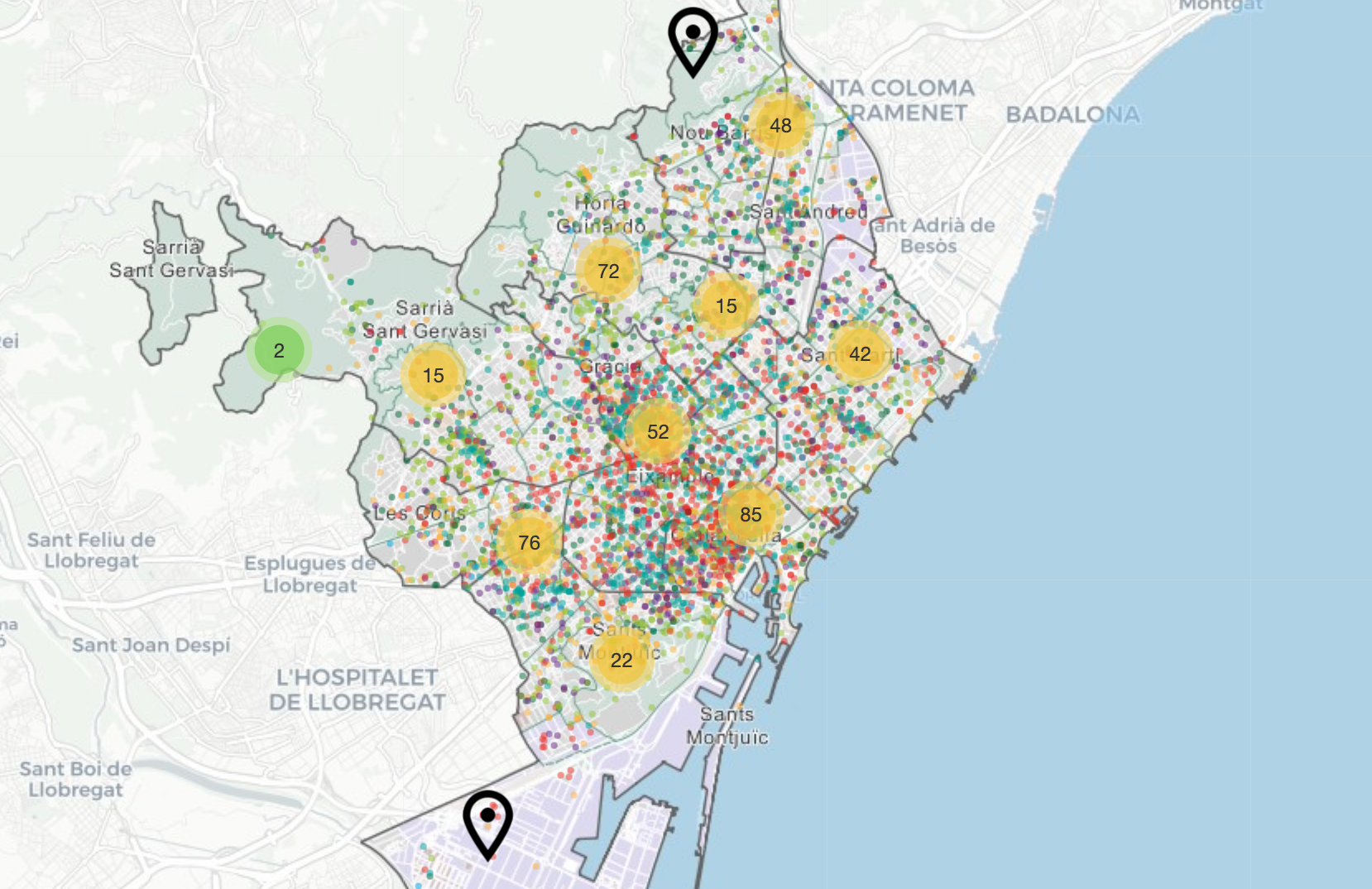
This thesis explores the growth of deeply ecological ways of being in the city of Barcelona, an ethical and ontological orientation to the world that I call ‘urban eco-centrism’. While ‘urban eco-centrism’ can be materialised through an array of environmental actions, from erecting off-grid systems to climate campaigning, I focus on individuals who are driven to set up and become stewards of alternative green spaces in the city. Partly in response to increasing drought and heat waves, over 100 green spaces have burst through Barcelona’s concrete pavements in the last twenty years. My fieldwork (12 months) took place in three of these urban green spaces and it is from their leafy contours that I un-ravel what ‘urban eco-centrism’ looks like. These multi-species infrastructures are shaped through differing visions, from urban huertos (allotments) growing organic food to micro-climates that host biodiverse assemblages of flora and fauna.
My ethnography unfurls the psychological and embodied dimensions of deep ecological being emerging from these green spaces, from forms of personhood dependent upon ongoing interaction with plants to ontologies that demand physical proximity to ecological processes. Contributing to environmental anthropology, I make interventions into broader discussions around ‘personhood’ and ‘the social’ through exploring their formation within conflicting inter-species, anthropocentric and urban neoliberal contexts and discourses. My research also sheds light on the challenges faced by urban individuals who have prioritised the environment in their everyday lives. The semi-conscious emergence of anthropocentric values in everyday social interactions forms one such challenge. Contributing to the anthropology of Europe, my findings shed light on the ways in which urban Europeans grapple with radically conflicting discursive and infrastructural relations to the environment, as opposed to having absorbed a singular nature-cultural ontology.
Biography:
After my BA in English Literature (UCL) and a year spent as a freelance photojournalist in Barcelona, I completed an MSc in Anthropology (UCL) in 2018. Following ethnographic research in one of Cordoba’s most historic mosques, I explored Spanish Moroccan Muslims’ historical consciousness of Spain’s Islamic past and this related to public and private modes of religiosity. My MRes in anthropology (SOAS) focused on the relation between public displays of Jewishness in Barcelona and the global growth of minority groups who display their cultural or ethnic traditions through the heritage industry since the 1980s. This research culminated in my co-organisation of a three-day workshop exploring public Jewish identity, while I also co-ordinated the Jewish-Muslim Research Network and continue to write journalistic articles.
I’m currently a doctoral candidate at SOAS, University of London, supervised by Dr. Naomi Leite & Dr. Kostas Retsikas. Situated in environmental anthropology, my ESRC-funded doctoral research explores the emergence of ecological ways of being in the city of Barcelona. I’ve designed and am teaching the 190 Year 1 Seminar: Explorations in Anthropology module at SOAS. The module is titled ‘Exploring (Non-)Human Identities’ and unravels human-environmental relations, often using intimate frameworks such as personhood or kinship to analyse economic and infrastructural processes, such as capitalist transformations of the environment. I deliver outdoors, sensorial workshops that aim to critically un-pack participants’ relations to the environment. The workshops use anthropological tools and frameworks, from self-reflexivity to exploring naturalised epistemological relations to ‘the environment’. With Prof. Thomas Stodulka (University of Münster), I co-runs a monthly, online environmental anthropology reading group.
For any interest in or questions about my research, or journalistic commissions, email me at: florahastings3@gmail.com
 florahastings.com