Permaculture DESIGN course at yakunina, Ecuador
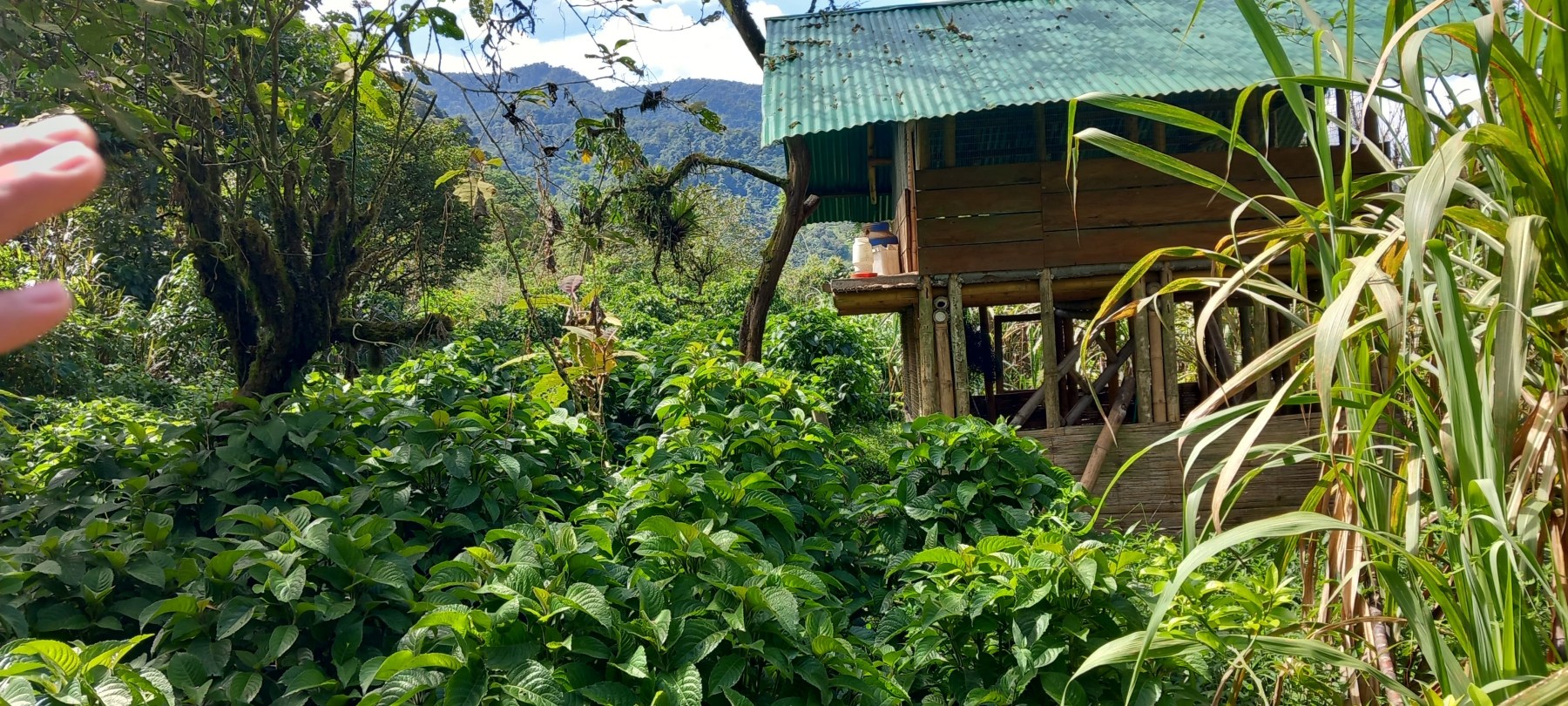
(traducción en español a continuación) I recently returned from a permaculture design course at Yakunina, in the Choco Andino, where we were taught how to design permacultural food and living systems. The Choco Andino is a protected rainforest biosphere in Northern Ecuador (see pictures of the course here). Yakunina is a permacultural farm, and Pauline and Miguel who run it have spent over a decade creating clean water systems, teaching permaculture and mobilising groups in el choco to restore the regions ecology.
Recently the choco won a vote against further mining in the region, which happened shortly before there was a national referendum that led to the blocking of oil drilling in the Yasuni region of the Amazon. Following tireless activism and campaigning from environmental groups in the country, 68% voted against further drilling in Yasuni while mining was also restricted in the Choco region. Meanwhile while in the UK – Rishi Sunak grants 100 new licenses to oil and gas production in the North Sea without any public consultation.
Permaculture can be broken down into ‘permanent culture/ agriculture’ and is a system which emerged in the 1970s to propose ways of creating sustainable food and social systems. Permaculture draws from pre-existing agro ecological traditions, many of which developed in Latin America (also known as Abya Yala) over the past 8,000 years. During the course, we learnt from Andean and Incan agricultural traditions as a means to design ecological food structures – from the camellones (Waru Waru in Quechua/ sistemas hidráulicos) to terraces made of cangahua rock which harvested water through level curves in the landscape, an Incan technique.
Core principles of permaculture include: restoring a landscape through food growing as opposed to depleting it (the opposite of conventional agriculture), integrate food systems into the local ecosystem through mimicking the designs and cycles of the ecosystem around you (such as a creating food forest) and maintaining energy within one’s land through syntropic agriculture (creating systems which build up energy instead of deplete it and rely on external energy sources). The principles and systems of permaculture can be applied to any ecosystem, while many of its inspirations were developed in the tropic regions, owing to the rich tradition of food forests in the Amazon and the tropics more broadly (where many globalised crops were domesticated: rice, potato, sweet potato, cocoa, peanut, rubber, tobacco, cotton, oil palm, coconut, sugarcane, coffee, banana, pineapple, mango, and papaya etc).
There are many values woven into permaculture that are harder to quantify: the invitation to continue rituals and acts of care that attend to nature (such as the four Raymi festivals celebrated by many Andean indigenous groups in Ecuador), the encouragement of human humility before nature and the need for patient observation of how natural systems work in order to be able to imitate and learn from them, and as Paulina said, the need to create a ‘new culture of water’ whereby we do not watch clean water to die dirty each day by allowing it to pass through contaminating mediums. Permaculture design inspires us to design buildings and landscapes which follow the curves and patterns of nature, putting plants on roofs, making vegetable beds that curve with the topography of the land, allowing for the uneven effect of bioconstruction (that we now often associated with pre-industrial buildings).
In the course, we were joined by climate activists who had spent years preserving the choco, such as Jaime and Mimi who have guarded 600 species of fruit on their farm, to Arariwa who, over in Cuenca, has been fighting with many others in Kimsakocha, protecting Andean lagoons against the pollution of gold mining in the region. Article pasted below.
This trip was made possible by an ESRC grant and will be used to understand permaculture as its developing in urban gardens in Barcelona, often shaped by migrants from Latin America/ Abya Yala. Yakunina also accept volunteers (ideally Spanish speaking but not obligatory).
Some of Yakunina’s permacultural lessons..
1)To design water systems within a given topography, we learnt how to use accessible technology, like a Water Level (a hose filled with water with wooden sticks), instead of expensive computer programmes and drones. This allowed us to measure the level curves of a landscape and learn how to harvest and drain water. Trees, plants and shaped soil help massively to prevent soil erosion and help store water in the ground, crucial when climate heating causes increased water evaporation after rain.
2)We learnt how to collect colonies of micro organisms (such as mycelium webs) from the forest and reproduce them, creating fertiliser that will speed up the creation of healthy soil, nutrient cycling and the decomposition of plant matter.
3)We visited a finca which grew over 600 species of local fruit, all growing in the soil within a healthy food forest – crucial when the globe relies on only 15 crops for 90% of our energy intake. The mass commercialisation of a few crops has led to the extinction of millions of plant species that may have been genetically resilient to the climate extremes and pathogens which we now face.
4)We learnt how to build a wall using natural materials (clay, rocks, sand, hay) gathered from the surrounding landscape – and which is cheap to do if you find volunteers to help you and cuts out the need for construction materials that rely on long supply chains. Minga is quechuan word which some andean communities use to designate communal agricultural work, and often Mingas were used to communally build houses.
5)We learnt how to purify water through the use of carbon filters and vermifilters – converting grey (bathroom and kitchen) and black (toilet) water into clean water that was filtered through worms and then papyrus plants, turning toilet waste into water that fed a diverse ecosystem in the shape of a beautiful lagoon. Pauline and Miguel taught us about the damage to ecosystems caused by the amount of grey water (soap, shower, sink) that goes directly into the rivers without being treated, killing local ecosystems and polluting the water. In the UK, water companies have been dumping raw sewage into rivers illegally. In 2022 in the UK, water firms discharged raw sewage 300,000 times last year,
6)We learnt how to slowly replenish poor soil through mimicking the growth succession of wooded ecosystems: first planting low, annual plants and eventually onto tree species that mimic the long standing species of a climax community (complex, healthy ecosystem). The finca of Yakunina itself used to be a monoculture of palmitos, and Miguel and Paulina have been slowly restoring the land to merge with the wider ecosystem of the choco – bringing monkeys, frogs, toads, snakes, spiders, insects, birds (and countless other species) closer and closer to their land. In the choco andino, which was declared a protected biosphere by UNESCO in 2018 (following mobilisation by local activists), there are 700 species of birds, 140 amphibians and 40 kinds of reptiles.
7)We learnt how to forage and prepare PANCS (healthy non-conventional plants), as a core part of transitioning to permaculture food systems is shifting from our dietary reliance on annual crops to perennial crops that flourish in abundant, shady forest systems.
8)We were told about the manifold impacts of agribusiness in Ecuador: from exploitation of workers, cancer and mental health problems caused by breathing in pesticides, the permanent pollution of water through mining (by the insertion of metal particles into the water system), the assassination of activists who try and confront the water pollution in the country.
9)we learnt how to break the carbon dioxide cycle through burning wood and burying it into the soil where it the carbon will remain stored and become energy course of soil microbes (and not escape back into the atmosphere as carbon dioxide).
To learn more about these topics, listen to Radio Semillas, a podcast run by Gaurdianas De Semillas (which Yakunina form a part of).
Tranducion a Español:
Acabo de regresar de un curso de diseño de permacultura en Yakunina, en el Chocó Andino, una biosfera de selva tropical protegida en el norte de Ecuador. Yakunina es una granja permacultural, y Pauline y Miguel, quienes la dirigen, han pasado más de una década creando sistemas de agua limpia, enseñando permacultura y movilizando grupos en el Choco region para restaurar la ecología del area.
Recientemente, el Choco ganó una votación en contra del crecimiento de minería en la región, lo que ocurrió poco antes de que hubiera un referéndum nacional que condujo al bloqueo de la extracción de petróleo en la región de Yasuní en el Amazonas. Luego del incansable activismo y campaña de los grupos ambientalistas del país, el 68% votó en contra de nuevas perforaciones en Yasuní, mientras que la minería también fue restringida en la región del Chocó. Mientras tanto, en el Reino Unido, Rishi Sunak concede 100 nuevas licencias para la producción de petróleo y gas en el Mar del Norte sin ninguna consulta pública.
La permacultura se puede dividir en “cultura/agricultura permanente” y es un sistema que surgió en la década de 1970 para proponer formas de crear sistemas alimentarios y sociales sostenibles. La permacultura se basa en tradiciones agroecológicas preexistentes, muchas de las cuales se desarrollaron en América Latina (también conocida como Abya Yala) durante los últimos 8.000 años. Durante el curso, aprendimos de las tradiciones agrícolas andinas e incas como medios para diseñar estructuras alimentarias ecológicas, desde los camellones (Waru Waru en quechua/sistemas hidráulicos) hasta terrazas hechas de roca cangahua que recolectaban agua a través de curvas de nivel en el paisaje, un Técnica inca.
Los principios básicos de la permacultura incluyen: restaurar un paisaje mediante el cultivo de alimentos en lugar de agotarlo (lo opuesto a la agricultura convencional), integrar los sistemas alimentarios en el ecosistema local imitando los diseños y ciclos del ecosistema que lo rodea (como la creación de un bosque de alimentos). ) y mantener la energía dentro de la propia tierra a través de la agricultura sintrópica (creando sistemas que acumulan energía en lugar de agotarla y dependen de fuentes de energía externas). Los principios y sistemas de la permacultura se pueden aplicar a cualquier ecosistema, mientras que muchas de sus inspiraciones se desarrollaron en las regiones tropicales, debido a la rica tradición de los bosques alimentarios en el Amazonas y en los trópicos en general (donde se domesticaron muchos cultivos globalizados: el arroz). , papa, batata, cacao, maní, caucho, tabaco, algodón, palma aceitera, coco, caña de azúcar, café, plátano, piña, mango y papaya, etc.).
Hay muchos valores entretejidos en la permacultura que son más difíciles de cuantificar: la invitación a continuar con rituales y actos de cuidado que atiendan a la naturaleza (como los cuatro festivales Raymi celebrados por muchos grupos indígenas andinos en Ecuador), el estímulo a la humildad humana ante la naturaleza y la necesidad de observar pacientemente cómo funcionan los sistemas naturales para poder imitarlos y aprender de ellos, y como dijo Paulina, la necesidad de crear una ‘nueva cultura del agua’ mediante la cual no veamos que el agua limpia muera sucia cada vez. día dejándolo pasar a través de medios contaminantes. El diseño de permacultura nos inspira a diseñar edificios y paisajes que siguen las curvas y patrones de la naturaleza, colocando plantas en los techos, creando huertos que se curvan con la topografía del terreno, permitiendo el efecto desigual de la bioconstrucción (que ahora asociamos a menudo con la prehistoria). -edificios industriales).
En el curso nos acompañaron activistas climáticos que llevaban años preservando el choco, como Jaime y Mimi que han custodiado 600 especies de frutas en su finca, hasta Arariwa que, en Cuenca, ha estado peleando con muchos otros en Kimsakocha. , protegiendo las lagunas andinas contra la contaminación de la minería aurífera en la región. Artículo pegado a continuación.
Este viaje fue posible gracias a una subvención de ESRC y se utilizará para comprender la permacultura como su desarrollo en los jardines urbanos de Barcelona, a menudo moldeados por inmigrantes de América Latina/Abya Yala. Yakunina aceptan voluntarios tambien.
https://www.opendemocracy.net/democraciaabierta/ecuador-water-defenders-gold-mining-river-pollution/
Algunas de las lecciones que tuvimos en orden de las fotos:
1. Para diseñar sistemas de agua dentro de una topografía determinada, aprendimos a utilizar tecnología accesible, como un nivel de agua (una manguera llena de agua con palos de madera), en lugar de costosos programas de computadora y drones. Esto nos permitió medir las curvas de nivel de un paisaje y aprender a recolectar y drenar agua. Los árboles, las plantas y el suelo moldeado ayudan enormemente a prevenir la erosión del suelo y ayudan a almacenar agua en el suelo, algo crucial cuando el calentamiento climático provoca una mayor evaporación del agua después de la lluvia.
2) Aprendimos cómo recolectar colonias de microorganismos (como redes de micelio) del bosque y reproducirlas, creando fertilizantes que acelerarán la creación de suelo saludable, el ciclo de nutrientes y la descomposición de la materia vegetal.
3) Visitamos una finca que cultivaba más de 600 especies de frutas locales, todas creciendo en el suelo dentro de un bosque de alimentos saludables – crucial cuando el mundo depende de sólo 15 cultivos para el 90% de nuestra ingesta de energía. La comercialización masiva de unos pocos cultivos ha llevado a la extinción de millones de especies de plantas que pueden haber sido genéticamente resistentes a los extremos climáticos y a los patógenos a los que nos enfrentamos ahora.
4) Aprendimos cómo construir un muro utilizando materiales naturales (arcilla, rocas, arena, heno) recolectados del paisaje circundante, y lo cual es barato de hacer si encuentras voluntarios que te ayuden y eliminas la necesidad de materiales de construcción que dependen de en largas cadenas de suministro. Minga es una palabra quechua que algunas comunidades andinas utilizan para designar el trabajo agrícola comunal y, a menudo, las mingas se utilizaban para construir casas comunitarias.
5) Aprendimos cómo purificar el agua mediante el uso de filtros de carbón y vermifiltros, convirtiendo el agua gris (baño y cocina) y negra (inodoro) en agua limpia que se filtraba a través de lombrices y luego plantas de papiro, convirtiendo los desechos del inodoro en agua que alimentaba un ecosistema diverso en forma de una hermosa laguna. Pauline y Miguel nos enseñaron sobre el daño a los ecosistemas causado por la cantidad de aguas grises (jabón, ducha, lavabo) que van directamente a los ríos sin ser tratadas, matando los ecosistemas locales y contaminando el agua. En el Reino Unido, las compañías de agua han estado vertiendo ilegalmente aguas residuales sin tratar en los ríos. En 2022, en el Reino Unido, las empresas de agua descargaron aguas residuales sin tratar 300.000 veces el año pasado.
6) Aprendimos cómo reponer lentamente los suelos pobres imitando la sucesión de crecimiento de los ecosistemas boscosos: primero plantando plantas anuales bajas y, finalmente, especies de árboles que imitan las especies de larga data de una comunidad clímax (ecosistema complejo y saludable). La propia finca de Yakunina solía ser un monocultivo de palmitos, y Miguel y Paulina han estado restaurando lentamente la tierra para fusionarla con el ecosistema más amplio del choco – trayendo monos, ranas, sapos, serpientes, arañas, insectos, pájaros (e innumerables otras especies) cada vez más cerca de su tierra. En el choco andino, declarado biosfera protegida por la UNESCO en 2018 (tras la movilización de activistas locales), habitan 700 especies de aves, 140 anfibios y 40 clases de reptiles.
7) Aprendimos cómo buscar y preparar PANCS (plantas no convencionales saludables), ya que una parte central de la transición a sistemas alimentarios de permacultura es pasar de nuestra dependencia dietética de cultivos anuales a cultivos perennes que florecen en sistemas forestales abundantes y sombreados.
8) Nos hablaron de los múltiples impactos del agronegocio en Ecuador: desde la explotación de los trabajadores, el cáncer y los problemas de salud mental causados por la inhalación de pesticidas, la contaminación permanente del agua a través de la minería (por la inserción de partículas metálicas en el sistema de agua), el asesinato de activistas que intentan enfrentar la contaminación del agua en el país.
9) aprendimos cómo romper el ciclo del dióxido de carbono quemando madera y enterrándola en el suelo, donde el carbono permanecerá almacenado y se convertirá en energía para los microbios del suelo (y no escapará de regreso a la atmósfera como dióxido de carbono).
Para conocer más sobre estos temas, escuche Radio Semillas, un podcast dirigido por Gaurdianas De Semillas (del cual Yakunina forma parte).
 florahastings.com